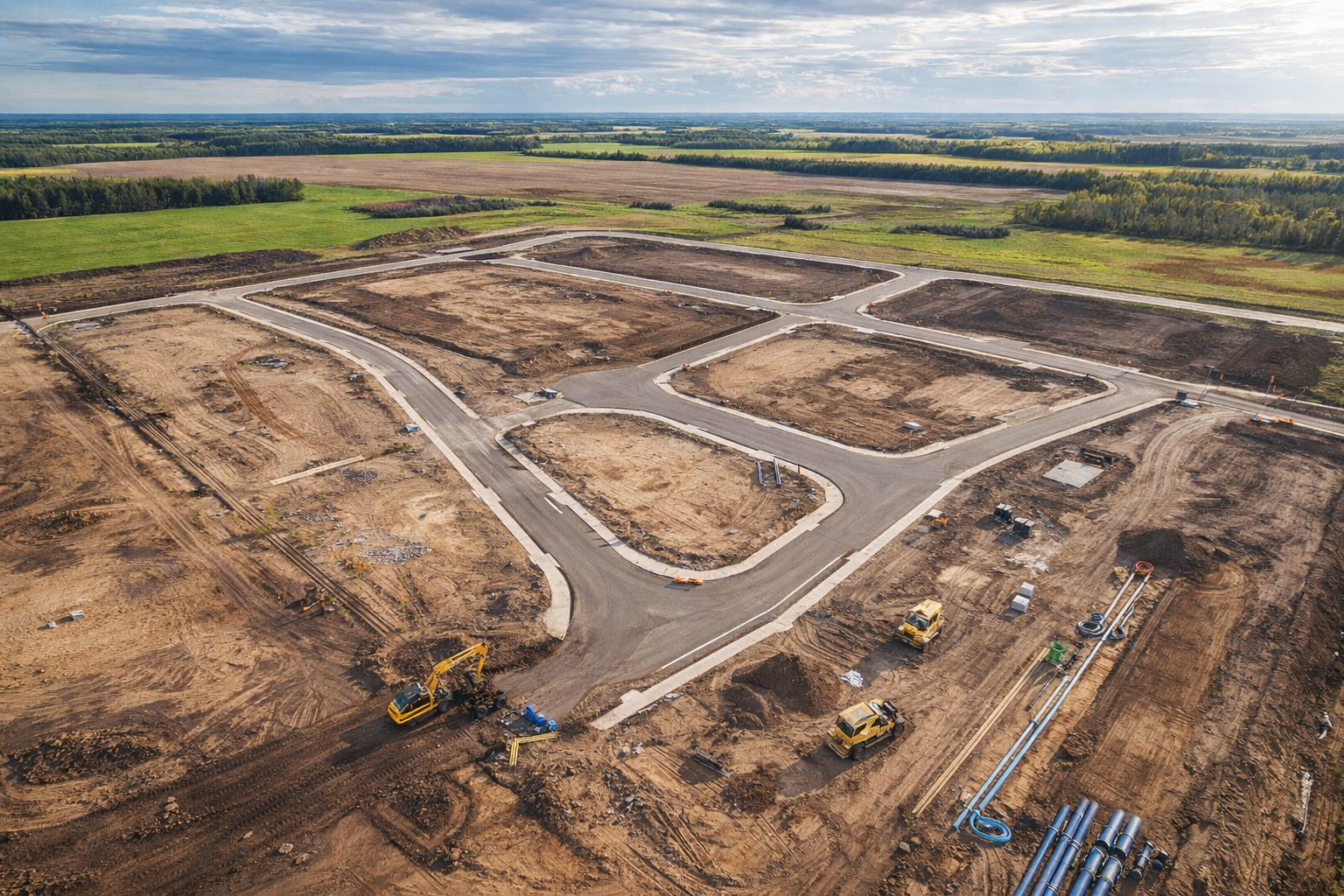
Land development is a detailed and multi-stage process that transforms raw land into functional residential, commercial, or mixed-use spaces.
In Alberta, this process involves careful planning, regulatory approvals, and coordinated execution.
Understanding each stage can help property owners, investors, and stakeholders make informed decisions and set realistic expectations for timelines and outcomes.
1. Initial Site Evaluation and Feasibility
The first step in any land development project is determining whether the property is suitable for development.
This includes:
- Reviewing zoning and land use designations
- Assessing site conditions such as topography and access
- Evaluating infrastructure availability (roads, utilities)
At this stage, developers identify potential constraints and opportunities that may impact the project.
2. Planning and Concept Design
Once feasibility is established, the project moves into planning.
This phase typically involves:
- Developing a conceptual layout for the land
- Identifying lot configurations or building placements
- Coordinating with engineers and consultants
The goal is to create a plan that aligns with municipal requirements while maximizing the land’s potential.
3. Municipal Approvals and Permits
Before any construction begins, approvals must be obtained from the local municipality.
This process may include:
- Rezoning or land use amendments (if required)
- Subdivision applications
- Development permits
Each municipality in Alberta has its own approval timelines and requirements, making this one of the most critical stages in the process.
4. Detailed Engineering and Design
After approvals are underway or secured, detailed technical planning begins.
This includes:
- Civil engineering plans
- Stormwater management design
- Utility servicing plans
These designs ensure that the development will function properly and meet regulatory standards.
5. Site Preparation and Construction
With approvals and designs in place, the physical development begins.
This stage may involve:
- Clearing and grading the land
- Installing infrastructure such as roads and utilities
- Preparing lots for building
Construction timelines vary depending on project size, location, and complexity.
6. Final Approvals and Project Completion
Once construction is complete, the project undergoes final inspections and approvals.
This ensures:
- Compliance with municipal standards
- Infrastructure is functioning as intended
- The development is ready for occupancy or sale
At this stage, the land is fully transitioned from raw property to a usable and valuable asset.
Conclusion
Land development in Alberta is a structured process that requires careful coordination across multiple stages. From initial feasibility to final approvals, each phase plays a critical role in ensuring a successful outcome.
Whether you’re exploring the potential of a property or planning a future project, having the right guidance can make a significant difference in navigating timelines, approvals, and overall project strategy.
If you’re considering a land development project and want to better understand your options, we invite you to connect with our team to discuss your goals and next steps.